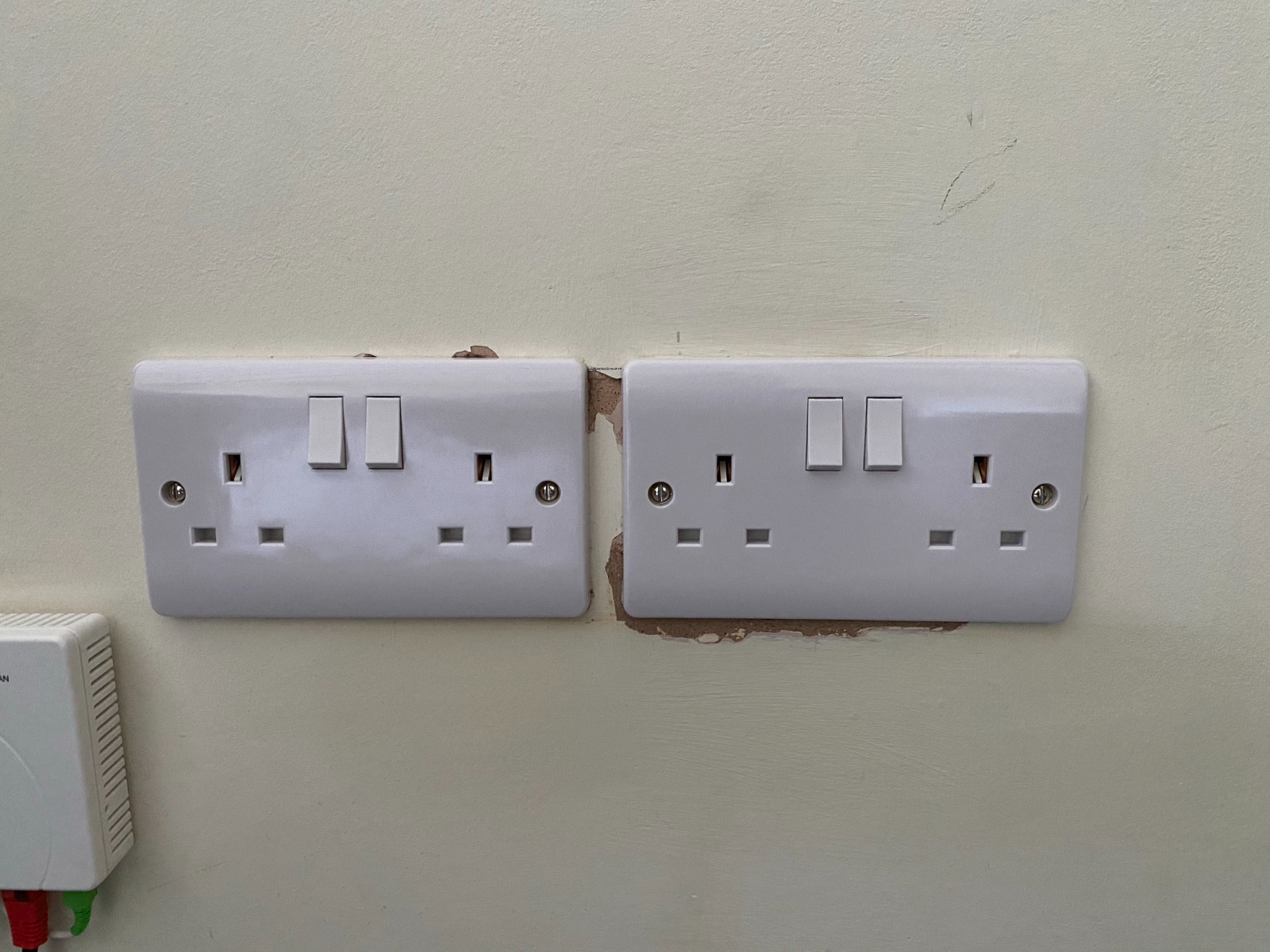
Adding an extra double socket to a room sounds like one of those small electrical jobs that should be fairly straightforward.
And sometimes it is.
But before I start drilling holes and running cables, there are several things I need to consider about the existing electrical installation first.
Installation of the new socket may be relatively straightforward, but the existing circuit needs to be properly assessed first to ensure that it is safe, suitably protected and capable of supporting the additional socket.
This is particularly relevant in older homes where the wiring and protective devices may have been installed many years ago.
Why do people need extra sockets?
Modern homes simply use far more electrical equipment than they used to.
It isn't unusual for a homeowner to find that the number of sockets originally installed in a room are no longer enough.
You might want an additional socket for:
- A television or entertainment system
- Computer or home office equipment
- Lamp or floor-standing light
- Washing machine or tumble dryer
- Kitchen appliances
- Equipment in a garage, utility room or shed
Rather than relying on extension leads and trailing cables, installing additional fixed sockets can often provide a much tidier and more convenient solution.
But first, the existing house socket circuit needs to be assessed.
Can I just add another socket to the existing circuit?
This is where the answer becomes - "it depends".
An electrician needs to establish what type of circuit is currently installed and whether it is suitable for the proposed alteration.
For example, the sort of things I may need to consider are:
- What type of circuit is it?
- What protective device is being used at the fuse board?
- What type of RCD protection is currently in place?
- Is the existing wiring in good condition?
- Is there sufficient capacity for the additional load?
- Where will the new cabling need to routed?
- Are there any concealed services or other hazards to consider?
These are all things that may turn what appears to be a simple socket install, into a job that requires a little more investigation.
What about the RCD protection?
This is becoming an increasingly important consideration when modifying older installations.
Modern domestic electrical installation commonly use 30mA RCD protection to provide additional protection against electric shock for socket circuits.
However not all RCDs are the same.
Older fuse boards may still contain old generation Type AC RCDs, whereas modern installations generally need Type A RCD protection now for many applications because these are designed to respond to additional forms of residual current associated with modern electronic equipment.
This means that I cannot simply look at an existing socket circuit and assume that because it has an RCD, everything is automatically suitable for a new alteration.
What if the existing wiring is old?
Older wiring isn't necessarily unsafe just because of it's old age.
I've worked in plenty of homes where parts of the electrical installation have been in place for many years and are still perfectly serviceable.
However adding a new socket is an opportunity to look at the condition of the existing circuit.
If I find damaged accessories, deteriorated cables, loose connections, signs of overheating or previous DIY alterations, these things need to be taken into account before extending the existing circuit.
It would make little sense to install a brand new socket onto a circuit that has an underlying problem that hasn't been addressed.
What about DIY electrical work?
One of the things I sometimes encounter when carrying out small electrical jobs is evidence of previous alterations.
A homeowner may have added an additional socket themselves, moved an existing accessory or extended a circuit using whatever materials happened to be available.
It can be tempting to think that if everything appears to be working and has been been in place for many years, everything must be fine.
Unfortunately, electrical faults aren't always visible.
Poor connections, incorrectly sized cables, damaged insulation or unsuitable protective arrangements may not cause an immediate problem but can create a significant risk when the circuit is placed under load.
Adding sockets in kitchens and utility rooms
Kitchens and utility rooms deserve particular consideration because they can contain several high-powered appliances.
Kettles, washing machines, tumble dryers, dishwashers, ovens and other appliances can all place significant demands on an electrical installation.
Simply adding more sockets doesn't increase the amount of electrical power available from the circuit.
The existing circuit still has its limitations.
This is why I need to understand what the new socket is intended to supply, rather than treating every additional socket as exactly the same.
What about sockets in garages, sheds and outside areas?
Outdoor and outbuilding installations require additional consideration too.
A socket supplying a shed or garage may be exposed to a completely different environment from a socket inside the living room.
There may also be additional requirements concerning:
- RCD protection
- Cable installation
- Mechanical protection
- Weather-resistant accessories
- Earthing and bonding arrangements
The complete electrical arrangement needs to be suitable for its intended use.
Sometimes what appears a small job isn't actually a small job
This is something I think homeowners should understand when asking an electrician for a small electrical job.
If you ask me to install an additional double socket, I'm not just looking at the new socket.
I'm looking at what the socket is being connected to.
If the existing installation is suitable, then the job may indeed be relatively straightforward.
But if the circuit has inadequate protection, damaged wiring, unsuitable previous alterations or an older protective arrangement that needs addressing, then additional remedial work may be necessary before the new socket can be installed safely.
This isn't about making a simple job complicated - it's about making sure the new work is safe, wiring regs complient and compatible with the existing electrical installation.
Do you need an extra socket in your Shrewsbury home?
If you're constantly reaching for an extension lead, or you're tired of having electrical cables trailing around a room, an additional fixed socket could be a much better solution.
Sometimes adding a socket really is a small job, but other times the request for an extra socket highlights something else that needs attention first.
I'll assess the existing installation, explain what is involved and let you know if there are any issues that need to be addressed before the new socket can be installed.
If you're looking for a trusted electrician in Shrewsbury to install extra sockets, call Ray today free no-obligation advice or to discuss the requirements for your home.
⚡ Ray's Safety Tip ⚡
If you regularly need extension leads because there aren't enough sockets in a room, consider having additional fixed sockets installed rather than creating a permanent network of trailing cables and extensions.
But if you are wanting to add extra sockets to an older installation, don't assume that the existing circuit is suitable just because everything currently appears to be working.
Have the circuit and its protective devices checked by a suitably qualified electrician first.
A new extra socket should make life easier, not create a new problem somewhere else in your electrical installation.