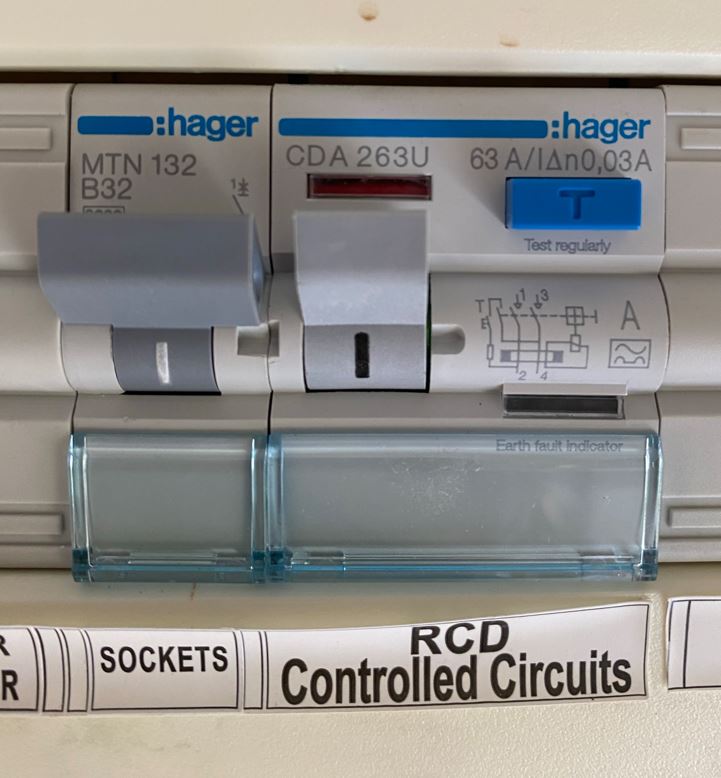
If you have an older fuse board you may quite reasonably assume that because it has RCD protection your home is still fully protected to modern standards.
But there is an important detail that is often overlooked - not all RCDs are the same.
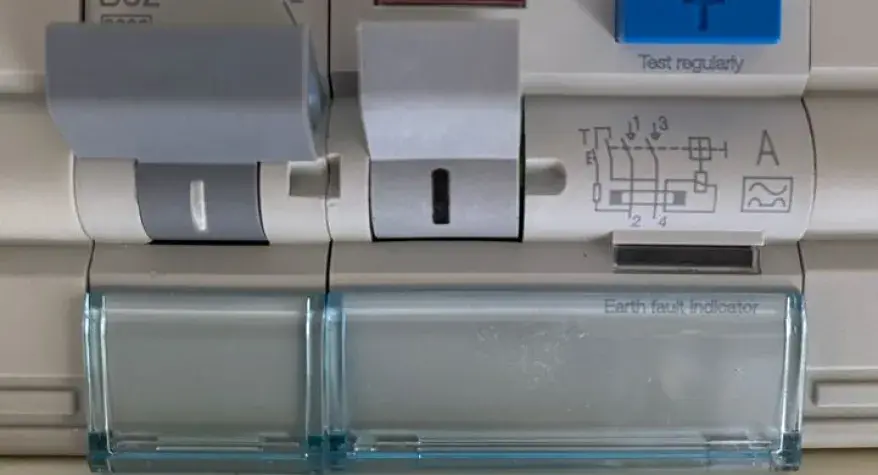
Older installations may still be fitted with "Type AC" RCDs, while modern electrical installations increasingly require "Type A" RCD protection because of the types of electrical and electronic equipment we use in our homes today.
What is an RCD?
An RCD, or Residual Current Device, is designed to provide additional protection against electric shock by detecting an imbalance in the electrical current flowing through a circuit.
For example, if current is flowing somewhere it shouldn't - such as through a person to earth - the RCD can detect the imbalance and disconnect the supply very quickly.
Modern electrical installations use 30mA RCD protection for socket circuits, providing an additional level of protection against electric shock.
But the "type" of RCD is very important also.
Type AC RCDs – the older generation
Type "AC" RCDs were widely used in domestic electrical installations for many years.
They are designed to detect conventional alternating current (AC) residual faults.
But the problem is that modern homes now contain a much greater number of electronic devices and appliances that can produce different forms of residual current.
Think about how many electronic devices you may have around your home:
- Washing machine and tumble dryer
- Dishwasher
- Induction hob
- LED lighting and LED drivers
- Computers and televisions
- Battery chargers
- Modern electronic heating controls
These types of loads can produce "pulsating DC residual currents", which is where the capabilities of a Type AC RCD can become a concern.
Type A RCDs – designed for modern electrical loads
The Type "A" RCD is designed to detect both conventional "AC residual current" and certain forms of "pulsating DC residual current".
This makes the Type A RCD protection much better suited to the electrical and electronic equipment found in modern homes, and one of the reasons it has become the expected choice for modern domestic installations now.
Therefore it is not simply just a case of looking at an older fuse board and thinking - "It's got an RCD, so everything must be fine" - because the "type" of RCD matters now as well.
Why can't you simply add a Type A RCD socket?
This is where things can become a little more complicated.
Imagine you have an older fuse board containing a Type AC RCD, and you want to extend an existing socket circuit to provide some additional sockets in a utility room.
It might initially seem logical to just simply install a modern Type A RCD-protected socket or RCD-fused connection unit at the new location.
However, there is an important consideration when RCDs are installed in series.
There is a hierarchical principle that an upstream RCD should be of an equal or higher type classification than a downstream RCD.
So installing a more capable Type A RCD downstream of an older Type AC RCD in the fuse board will not automatically resolve the issue.
Why is this important?
Certain types of residual current containing a pulsating DC component can potentially affect the operation of an upstream Type AC RCD.
This is sometimes described as the upstream Type AC device being "blinded" or impaired by the nature of the residual current.
The concern is that although the newer Type A device further down the circuit may be capable of detecting the fault, the older Type AC device upstream may not operate as intended.
This is one of the technical reasons why adding a Type A RCD accessory to an existing installation isn't necessarily the complete answer.
What does this mean when you want additional sockets?
This is something I regularly come across when carrying out smaller electrical jobs in homes.
As a homeowner may simply want:
- An additional double socket in the utility room
- Extra sockets in a kitchen
- Additional sockets in a garage or outbuilding
- Or new sockets more conveniently placed in your bedrooms
On the face of it, this can appear to be relatively straightforward job.
However, before extending an existing circuit I need to consider the existing wiring, protective devices and RCD protection that are currently in place.
If the existing circuit is protected by an older Type AC RCD, installing a Type A device further downstream will not necessarily provide the correct overall arrangement.
So therefore in a lot of circumstances the only appropriate solution is to upgrade the RCD protection at the fuse board rather than simply adding another RCD further along the circuit.
However where an old generation fuse board is present, it may be difficult to source modern replacement parts for it, so ultimately the entire fuse board may need to be replaced.
Does this mean your old fuse board is dangerous?
Not necessarily.
Having an older Type AC RCD does not automatically mean that your electrical installation is imminently unsafe.
The electrical installation in your home can contain equipment that was perfectly appropriate when it was installed, but now that does not necessarily reflect the lastest requirements or best practice for a modern installation.
The important point here is that electrical standards and the equipment that we use in our homes have evolved.
An older fuse board may still provide useful protection, but when you want to modify or extend the installation, the existing arrangement needs to be assessed properly to the latest wiring regulations.
Why I may recommend a fuse board replacement
If an existing socket circuit is protected by an older Type AC RCD, and you want to extend or modify that circuit, I may recommend upgrading the fuse board so that the installation has the appropriate modern RCD protection in place.
This can provide a more suitable foundation for future electrical work and modern household equipment.
It also gives the opportunity to assess the overall condition of the existing fuse board and consider other aspects of modern consumer unit protection.
But of course a fuse board replacement isn't just something I would recommend because the existing fuse board is old.
Electrical protection has moved on
The electrical installation in your home may have been perfectly adequate when the fuse board was originally installed.
But our homes have changed considerably.
We now have far more electronic equipment, smart devices, LED lighting, chargers and appliances containing electronic controls.
Consequently the types of residual current that electrical protective devices need to respond to have changed too.
This is why Type A RCD protection has become increasingly important now, rather than simply assuming that any RCD is suitable for every application.
Thinking of adding sockets or modifying an existing circuit in your Shrewsbury home?
If you have an older fuse board and are considering adding sockets, installing new electrical equipment, or extending an existing circuit - it is worth having the existing RCD protection checked first.
At RW Electrics Ltd I can assess the existing installation and explain what options are available before any work is undertaken.
I believe in giving homeowners straightforward advice about what is actually required - not just automatically recommending a complete replacement when other options may be available.
If an upgrade is necessary, I will always fully explain why it is needed and what it will achieve, so you can make an informed decision about your home.
⚡ Ray's Safety Tip ⚡
Don't assume that an RCD is suitable just simply because it is present.
The type and arrangement of the RCD are important, particularly when modern electronic equipment is being added to an older electrical installation.
If your fuse board has an older RCD device and you need to extend a circuit or want to add new sockets, have it checked by a suitably qualified electrician first.
Call Ray at RW Electrics Ltd today for friendly, straightforward electrical advice in Shrewsbury.